
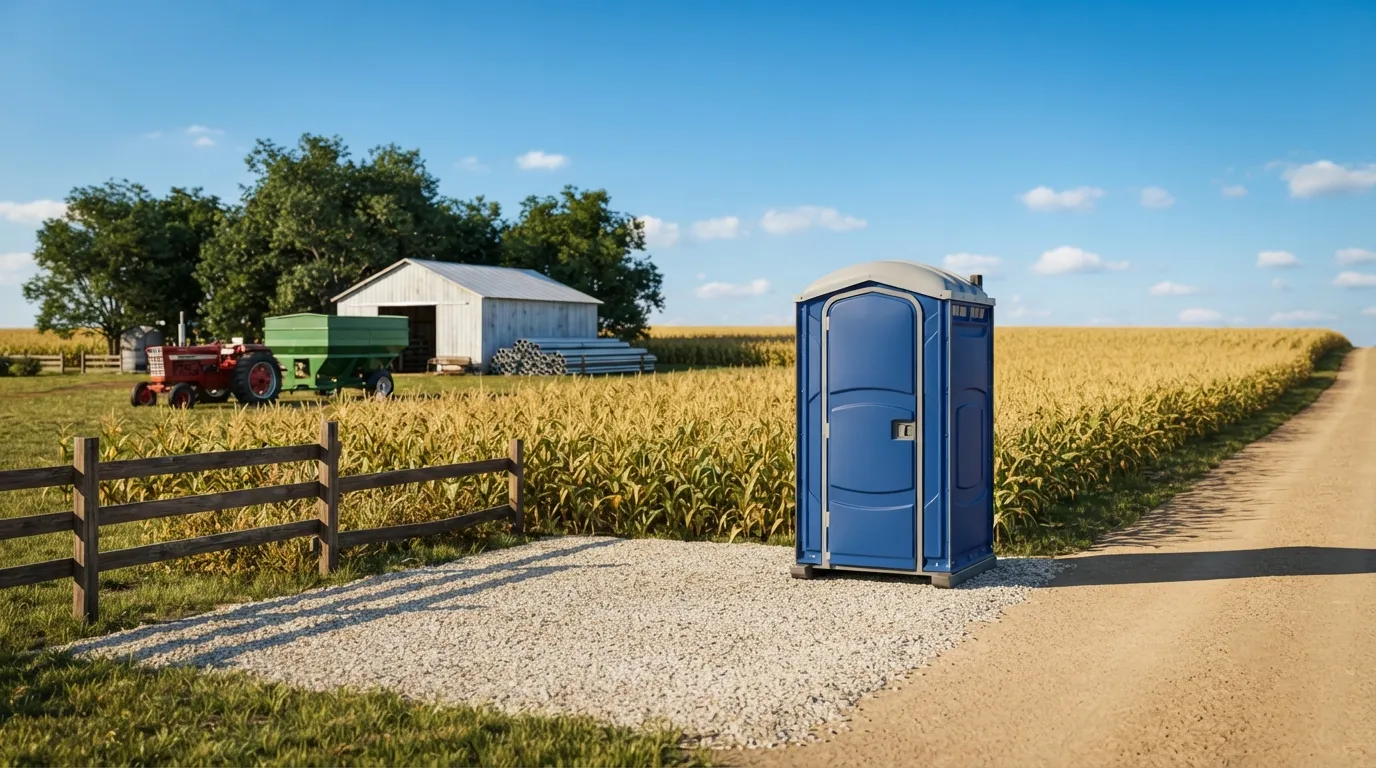
What do agricultural sites need for restrooms?
Field sanitation rules are different from a construction jobsite, and OSHA 1928.110 spells it out: potable water, toilet facilities, and handwashing, all within a quarter mile of where hand-labor employees are working, at a ratio of one facility per 20 employees. That quarter-mile figure matters on a spread-out property. A single standard porta potty rental parked at the barn does nothing for a crew picking rows a half mile out. Walnut Creek Porta Pros maps units against your actual field boundaries, not just the entrance, so crews are not walking twenty minutes each way. Most operations run several standard porta potty rental units spaced along the working perimeter, then move them as the crew shifts blocks. Water matters too. OSHA 1926.51(a)(1) requires an adequate supply of potable water in any place of employment, and that pairs with a handwashing station rental or a portable sink rental at each cluster point. Soap and towels are not optional extras. Under 29 CFR 1910.141(d)(2), washing facilities need soap and towels or a hand-drying device, and hand sanitizer alone does not satisfy it. If your crew is spraying, that changes the picture: OSHA 1926.51(f)(1) requires washing facilities where employees apply pesticides, herbicides, or other chemical treatments, so any orchard or vineyard doing seasonal spraying needs a wash station near the mixing and application area, not just near the break tent. Check our handwashing station requirements page before the season starts.
How many units does a farm or ranch need?
Run the math off headcount and OSHA 1928.110's one-per-20 ratio, then add distance. A 40-person harvest crew needs at least two toilets under that standard, but if the property runs long, you will want three or four spread out so nobody's quarter-mile becomes a half mile round trip during peak heat. Larger operations closer to town, including parcels near Shell Ridge 2.2 miles northeast or out toward San Miguel 2.7 miles south, often mix standard units with a deluxe flushable porta potty near the packing shed or hospitality area for supervisors and visitors. Weekly rates for a standard unit run in the 130 to 500 dollar range depending on service frequency and unit count, and monthly rentals for a season-long harvest typically land between 125 and 325 dollars per unit. Use our how many porta potties do I need calculator if you are juggling multiple field crews or a packing operation that runs a different schedule than the pickers. For farms with a permanent labor camp or bunkhouse, a holding tank rental can back up an existing septic system that was not built for peak-season headcount, and our septic pumping service team can pump it on a set schedule instead of waiting for a backup. If the farm has an on-site septic system already, most residential-scale tanks get pumped every 3 to 5 years depending on tank size and household or crew load, so ask about a septic tank pumping cost estimate before the season ramps up.
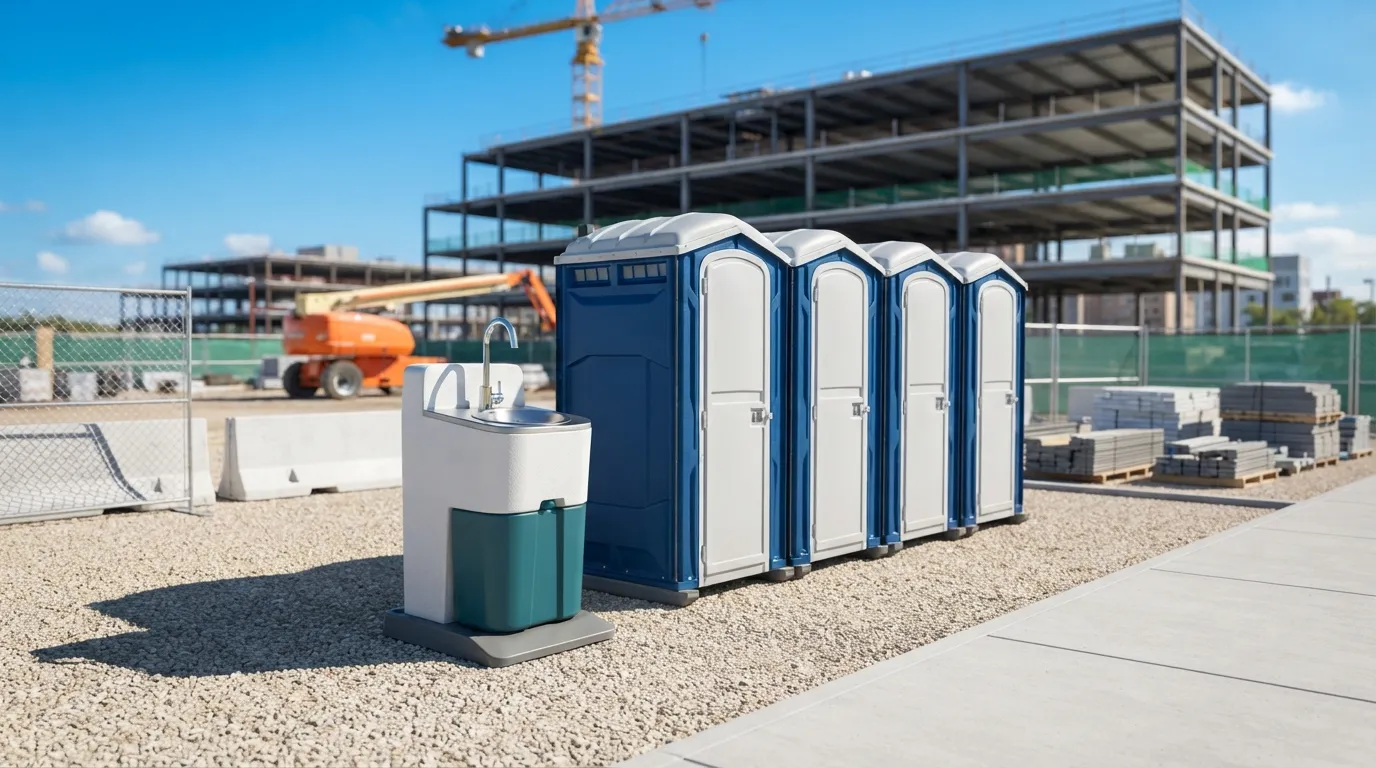
Why does farm sanitation need a different setup than a construction site?
Construction sanitation follows OSHA 1926.51(c), which sets ratios by headcount alone, with no walking-distance requirement attached. Field agriculture is different. OSHA 1928.110 ties the facility count to a quarter-mile walk, which means placement drives the plan more than headcount does on a spread-out farm. A vineyard with 30 workers spread across 80 acres needs a completely different layout than a construction crew of 30 working a half-acre lot in Walnut Creek. We treat farm placement like a route-planning problem: where does the crew actually stand during the workday, and how far are they walking on a bathroom break. That is also why farms benefit from a porta potty placement guide walk-through before delivery, especially on uneven terrain or unpaved access roads where a service truck needs firm ground to get in. Seasonal ag work near Pleasant Hill, 5.7 miles northwest, and Lafayette, 5.8 miles west, follows the same rule regardless of city line. If your operation runs pesticide or herbicide application on a rotation, plan a dedicated wash station under OSHA 1926.51(f)(1) near the mixing shed, separate from the general-use units near the crew break area.
Do farms need ADA accessible units too?
If the public visits, such as a farm stand, u-pick event, or seasonal market, ADA Standards 213.2 requires at least 5 percent of clustered units be accessible, minimum one. Add an ADA accessible porta potty for customer-facing areas even if the field crew units stay standard.
Can one wash station serve multiple field crews?
Not if crews are more than a quarter mile apart under OSHA 1928.110. Each cluster of workers needs its own facility within that walking distance. Spread handwashing station rental units across zones instead of centralizing one at the entrance.
What happens during harvest when headcount spikes?
Add units temporarily rather than resizing your permanent setup. A short-term porta potty rental per day or weekly add-on covers seasonal peaks without committing to a full-season contract increase.
Do we need a permit to place units on farmland?
Placement in the public right of way needs confirming with the city; private farmland typically does not trigger the same review. Check our porta potty permit requirements page before finalizing layout.
How often are units serviced during peak season?
Baseline service is one visit per week for up to 10 users over a 40-hour week, per ANSI/PSAI Z4.3. High-headcount harvest crews usually need twice-weekly service; ask about our how often are porta potties cleaned schedule options.
Next step
Get a delivery date
Tell us the address, the dates and the headcount. We size the order and confirm the route.