
How many units do you actually need?
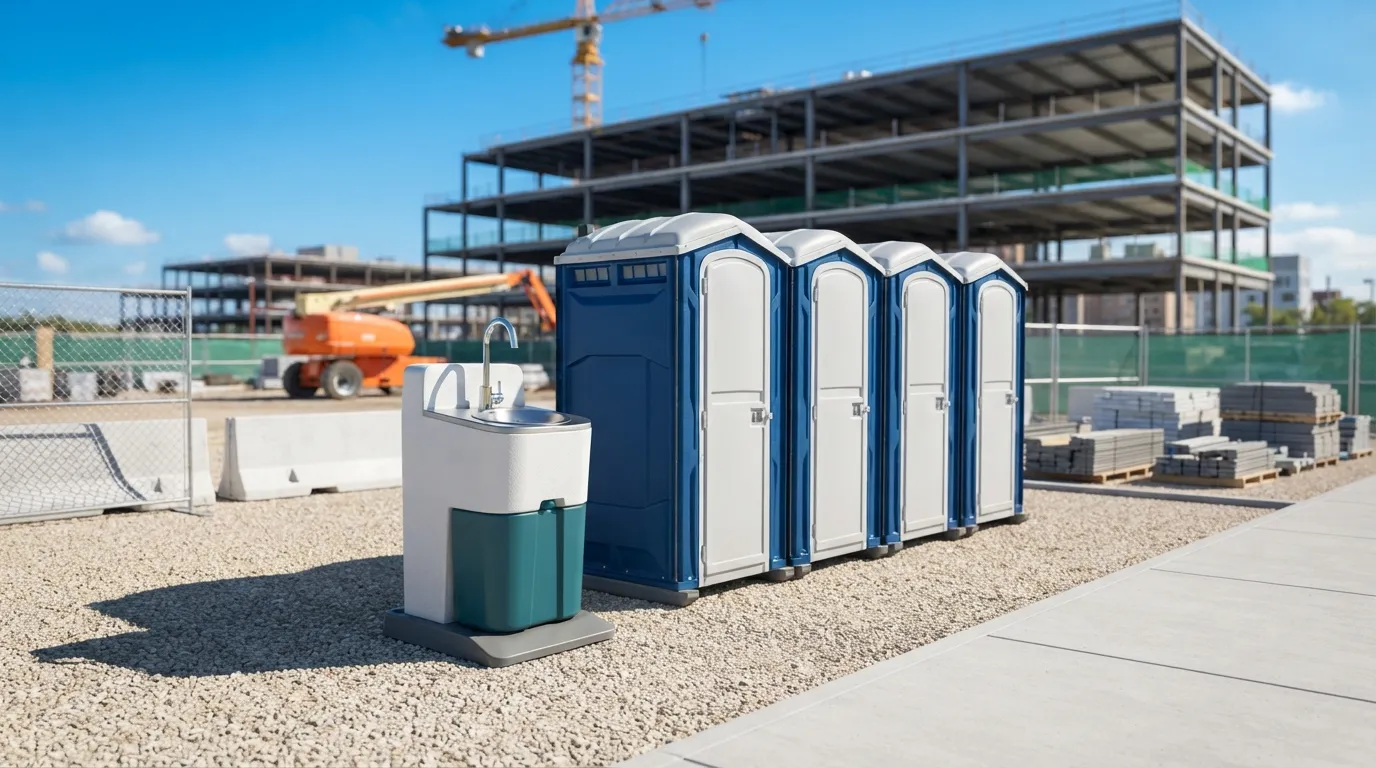
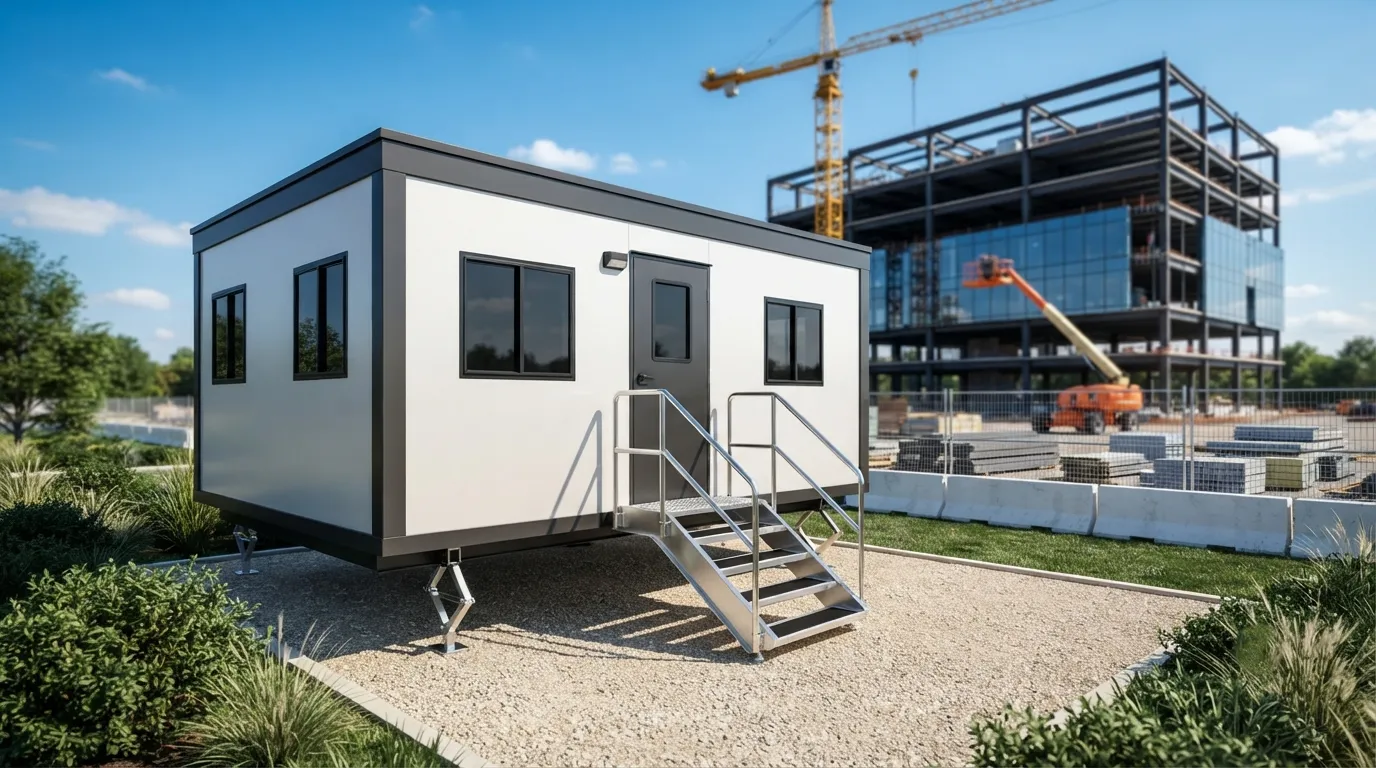
Start with worker count, not gut feeling. OSHA 1926.51(c)(1) sets the construction ratio at 1 toilet for 20 workers or fewer, then 1 toilet seat and 1 urinal per 40 workers once you pass 20, dropping to 1 per 50 at 200 or more. Farm crews follow a different rule: OSHA 1928.110 calls for field sanitation at 1 facility per 20 hand-labor employees, within a quarter mile walk, which matters for anyone running farm and agricultural restrooms out past Walnut Creek. Events run on headcount and hours, not labor ratios, so a wedding or festival crowd needs a different formula than a job site. Our guide on how many porta potties you need walks through both cases. Once you know the count, decide on unit type: standard units for job sites, a deluxe flushable model for staff or VIP areas, and at least one ADA accessible unit if the public attends. Full build-out for a big job might mean a restroom trailer instead of loose units.
Where should the unit go?
Placement decides whether the unit gets serviced on time and whether anyone can actually reach it. Ground under the unit needs to be stable, firm and slip resistant per ADA Standards 302.1, so gravel or a level pad beats soft turf every time. Delivery trucks need roughly 60 feet of straight clearance behind them, which rules out tight alleys and steep driveways in older parts of Walnut Creek. If the unit sits near a curb or sidewalk, placement in the public right of way needs confirming with the city before delivery day; call ahead rather than guess. Our placement guide covers slope, wind exposure and access paths in more depth. For ADA units, keep a 60 inch turning circle clear per ADA Standards 304.3.1, and check the door and approach against ADA restroom requirements before the crew arrives. Anywhere near Shell Ridge or San Miguel, that's roughly 2 to 3 miles from our yard, delivery timing still depends on street access, not distance.
When does the unit get serviced?
ANSI/PSAI Z4.3 sets the baseline at one service visit per week for up to 10 users across a 40 hour week, which works for a small crew but falls apart fast on an event weekend. High-traffic jobs, county fairs, marathons, or a multi-day build near Pleasant Hill (5.7 miles northwest) usually need two or three visits a week to keep tanks from filling past capacity. A standard unit carries a 60 to 70 gallon holding tank, so run the math on your headcount against that number before you set a service schedule. Our page on how often porta potties are cleaned breaks down what actually happens during a service stop. If you're renting for a full season rather than a weekend, a monthly porta potty rental locks in a set visit cadence instead of booking one-offs. Grease traps and septic tanks run on a longer clock: a grease interceptor gets pumped once fats, oils and grease solids hit 25 percent of liquid depth, and a residential septic tank typically needs pumping every 3 to 5 years depending on tank size and household size.
What does it cost to rent?
Price depends on unit type and how long you keep it, and the two don't move together the way people expect. A weekend rental of a standard unit runs from around 125 to 400 dollars depending on demand, while the same unit booked for a full week costs more in total but less per day.
| unit | day | week | month |
|---|---|---|---|
| standard | 100-350 | 130-500 | 125-325 |
| deluxe | 85-1200 | 150-290 | -- |
| ada | 200-400 | 120-240 | -- |
| dumpster | 51-112 | 426-778 | 91-500 |
Delivery fees run separately, typically 100 to 500 dollars for a single day drop and less per visit on a month-long booking. Full detail lives on our porta potty rental cost page, and day-rate specifics sit on porta potty rental per day. If the job also needs debris hauled, a roll-off dumpster rental or a look at dumpster rental cost rounds out the checklist. Sites running power tools alongside sanitation should also check temporary power pole options and confirm GFCI protection under OSHA 1926.404(b)(1)(ii).
What else belongs on the checklist?
Handwashing gets its own line item, separate from the toilet. 29 CFR 1910.141(d)(2) requires soap and towels or a hand-drying device at any washing station, and hand sanitizer alone does not satisfy that rule. Add a handwashing station rental or portable sink rental to the order, and if the crew works with paints, coatings, herbicides or insecticides, OSHA 1926.51(f)(1) requires washing facilities specifically for that contaminant exposure. Round out the list with temporary fencing for crowd control on public events and a storage container if tools need securing overnight.
How far out should you book?
Book standard units and dumpsters a few days ahead for routine jobs; book trailers and large events 2 to 3 weeks out since trailer availability is tighter. Weather, holidays and competing local events tighten the calendar fast in Walnut Creek, so confirm your date early through request a quote rather than the week of.
Do you need a permit for a porta potty?
Sometimes, depending on placement and duration. Units on private property for a construction job usually don't need one; units on a sidewalk, street or public right of way usually do. Check our permit requirements guide and confirm directly with the city before delivery.
What size is a standard unit?
A standard unit measures about 44 by 48 inches on the ground and stands roughly 92 inches tall. It holds a 60 to 70 gallon tank. Full specs, including deluxe and ADA models, are on the standard porta potty rental page.
Can you get emergency delivery?
Yes, for storms, plumbing failures or last-minute event needs. Same-day delivery depends on truck routes and street access. See emergency porta potty rental for how fast turnaround typically works.
How wide does the door need to be for ADA access?
At least 32 inches clear, per ADA Standards 404.2.3, with a 36 inch clear route leading to it under ADA Standards 403.5.1. Details sit on the ADA accessible porta potty page.
Next step
Get a delivery date
Tell us the address, the dates and the headcount. We size the order and confirm the route.